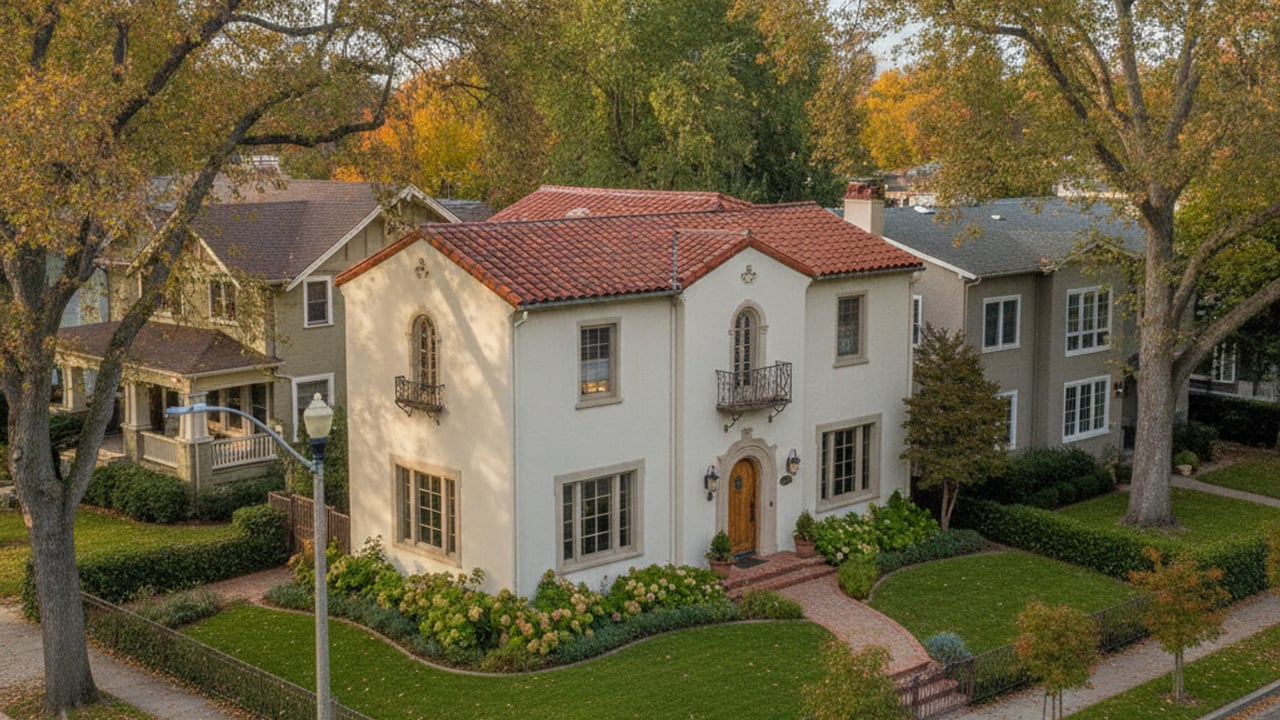
What to Expect for Buyer Closing Costs in East Sacramento, CA (2026)
East Sacramento
East Sacramento
For first-time home buyers in East Sacramento, CA, the market moves fast. With a median sale price of approximately $799,722 and homes spending just 9 days on the market, you don't have the luxury of figuring out your finances after you've found the right place.
The down payment is only one piece of the picture. You also need to budget for closing costs - the administrative, legal, and tax fees required to transfer ownership. Getting a handle on these numbers early is the difference between a smooth close and a scramble.
Closing costs are the fees paid at the end of a real estate transaction to finalize your mortgage, confirm the property's legal status, and register new ownership with Sacramento County.
Both buyers and sellers pay a share, but the types of fees differ. Buyers generally cover loan origination, appraisals, and certain title policies. Sellers handle agent commissions and their own tax obligations.
Your down payment reduces your loan amount directly - it's the portion of the purchase price you pay upfront. Closing costs are separate, non-refundable fees paid to third parties: lenders, escrow companies, local governments.
You can't usually roll buyer closing costs into your mortgage unless your lender offers a no-closing-cost option. In that case, the lender covers the upfront fees and you pay for it through a higher interest rate over the life of the loan.
Sellers in California generally pay more at the closing table, largely because they cover agent commissions. A seller's total closing costs often run roughly 6% to 10% of the sale price.
Buyers pay a smaller percentage, but the dollar amount is still real money. Your fees center on mortgage setup and title transfer, not marketing or commissions.
Buyers in California typically pay about 2% to 5% of the purchase price in closing costs. On an East Sacramento home at the current market median of $799,722, that works out to roughly $16,000 to $40,000.
Where you land in that range depends on your loan type, your mortgage size, and the property's location. East Sacramento properties carry a higher tax burden than homes in some neighboring areas, which tends to push your total toward the higher end.
The 2% to 5% range is a solid starting point for budgeting. Pay cash and you'll come in below 2%, since you cut out all lender-related fees, appraisals, and mortgage insurance entirely.
Use a low-down-payment loan or buy at a lower price point, and you'll often land closer to 4% or 5%. Many lender and escrow fees are flat rates, so they represent a larger slice of a smaller purchase price.
Buying within the incorporated City of Sacramento - which includes East Sacramento - triggers an extra layer of tax. The city charges a real property transfer tax of $2.75 per $1,000 of the sale price.
That stacks on top of the standard Sacramento County documentary transfer tax of $1.10 per $1,000. The combined rate of $3.85 per $1,000 is noticeably higher than what buyers in unincorporated county areas pay, where the rate stays at just $1.10 per $1,000.
East Sacramento has a wide range of property values, so the median alone doesn't tell the whole story. Running the numbers at a few price points makes the 2% to 5% range feel more concrete.
These estimates assume a standard financed purchase. If you're buying discount points to lock in a lower rate, add that to your upfront cash requirement.
On a $300,000 property, closing costs typically fall between $6,000 and $15,000. A $400,000 home puts you in the $8,000 to $20,000 range at the closing table.
A $500,000 purchase carries closing costs between $10,000 and $25,000. On a $600,000 home, expect somewhere between $12,000 and $30,000.
For a rough target, multiply your purchase price by 0.03 - that 3% middle-of-the-road estimate gives you a reasonable savings goal to work toward.
For a precise figure, you need to apply for a mortgage. Within three days of your application, your lender is required to provide a Loan Estimate detailing the exact fees, taxes, and prepayments for your specific loan.
Your final closing costs aren't one big number - they're the sum of dozens of individual line items. Those charges fall into three broad categories: loan costs, third-party services, and government taxes or prepayments.
Understanding the individual fees tells you where your money is actually going. It also shows you which costs you can shop around for and which ones are set by local law.
Lenders charge origination fees to process and underwrite your mortgage. You'll also pay for a home appraisal so the lender can confirm the property's value supports the sale price.
If you want to buy down your interest rate, discount points get paid here. Buyers using FHA or VA loans may also owe upfront mortgage insurance premiums or funding fees at this stage.
Escrow fees pay the neutral third party that manages the funds and paperwork through closing. Title insurance protects against past legal claims or errors in the property's ownership history.
Every financed transaction requires a lender's title insurance policy, which the buyer pays for. You'll also want an owner's title policy to protect your own financial interest in the property.
Local governments charge a tax to record the change in ownership. Sacramento County's base documentary transfer tax is $1.10 per $1,000 of the property's value.
East Sacramento buyers also owe the city's additional transfer tax of $2.75 per $1,000. That combined $3.85 per $1,000 rate adds a few thousand dollars to the final bill on a typical home here.
Your lender will require you to pay certain ongoing expenses upfront to fund your escrow account. That includes a full year of homeowners insurance paid at closing.
You'll also prepay several months of property taxes. How many months depends on when you close and when Sacramento County's next tax bill comes due.
Real estate customs vary across California, and what's standard in one region isn't necessarily the norm in another. Some fees are universally assigned to one party; others come down to local tradition and negotiation.
Northern California - including Sacramento - divides title and escrow fees differently than Southern California does. Knowing the local custom helps you put together an offer that doesn't raise eyebrows.
Loan-related fees are yours: the appraisal, credit report, and origination charges. You also cover your prepaid property taxes and homeowners insurance.
In Northern California and Sacramento, it's customary for the buyer to pay for the owner's title insurance policy - and you'll pay for the lender's title policy as well.
Sellers in East Sacramento typically cover agent commissions for both sides of the transaction. They also handle clearing any existing liens or judgments against the property.
Who covers the city and county transfer taxes is negotiable, but sellers often pay or split them. Escrow fees are frequently split 50/50 between buyer and seller in the Sacramento area.
A lot of these fees are fixed, but you do have options. Shaving even a half-percent off your closing costs can leave thousands of dollars in your pocket for moving expenses or repairs.
Your two main levers are negotiating with the seller and adjusting your mortgage terms.
You can ask the seller to cover a portion of your closing costs - this is called a seller concession. It's more common in slower markets. In East Sacramento, where over half of all homes are currently selling above list price, it can be harder to get a seller to agree.
If a home needs work, you might negotiate a credit instead of asking the seller to fix it before closing. The lender applies that credit directly against your closing costs.
You can also take a slightly higher interest rate in exchange for a lender credit that offsets your upfront costs. You pay for it over time through higher monthly payments, so it's a trade-off worth thinking through carefully.
And shop around. You can't choose your appraiser, but you can compare prices on title companies, escrow services, and homeowners insurance providers - and the differences aren't trivial.
You should expect to pay between 2% and 5% of the purchase price. On a typical East Sacramento home, that range covers loan origination, title policies, and local transfer taxes.
In Sacramento County, the buyer customarily pays for both the owner's and lender's title insurance policies. Escrow fees are often split evenly between buyer and seller, though everything is negotiable.
Yes, you can ask for seller concessions. With East Sacramento homes currently selling in a median of 9 days, though, sellers may be less willing to accept offers that ask for heavy concessions.
It depends on your negotiation. The combined $3.85 per $1,000 transfer tax has to be paid by someone - but buyers and sellers frequently negotiate who covers it, and sellers often pay or split the cost.
You typically wire funds to the escrow company one to three days before your official closing date. Your escrow officer will give you exact instructions once the final numbers are balanced.
Lenders are legally bound by tolerance limits on certain fees. If a restricted fee increases beyond the allowed limit, the lender must refund the difference to you at closing.
Stay up to date on the latest real estate trends.

Land Park CA
Land Park CA
Land Park CA

Land Park CA
Land Park CA
Land Park CA
Your real estate goals are within reach, and we’re here to be your guide. Whether you’re searching for your first home, looking to build your investment portfolio, or ready to maximize the sale of your property, MegaBliss Real Estate will provide the support, expertise, and dedication you need to reach your goals.
Get In Touch With Our Team To Learn More

1007 7th St Ste 400 Sacramento CA 95814 Melissa Allman | CA DRE# 01397300